










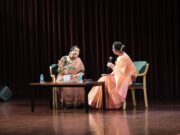



If you weren’t in that room, here is what you missed.
Not a launch. Not a photo-op with a cake and a mic-drop quote. What happened at Museo Camera the other evening was quieter than that, and somehow louder. A room full of people who came for a book and left carrying a city they didn’t know they’d lost.
At the centre of it, as she has been for almost two decades now, was Shriti Tyagi.
The woman behind the archive: Beyond Bombay and Beyond Delhi
Ask anyone who has walked a city with her, and they’ll tell you: Shriti Tyagi doesn’t give you a tour. She gives you a way of seeing. A theatre aficionado who founded The Manna Makers, a Katha Award-winning translator, a researcher on Why Loiter? Women & Risk on Mumbai Streets, a TEDx speaker, a chronicler of micro-cultures for ART India Magazine – Shriti’s résumé reads like five careers stitched into one restless curiosity. And out of that restlessness came Beyond Bombay and Beyond Delhi, the niche travel-and-culture collectives she built to make people fall in love, again, with the cities they thought they already knew.
Eighteen years of walks later – plague walks marking a century of Bombay’s bubonic outbreak, cemetery trails through Delhi, literary detours, food crawls, festival routes – Shriti has made a quiet, formidable case that a city is never just its skyline. It is memory, argument, and residue. And notHERE: The Absent Presence is the book where that argument finally gets its most complete telling.
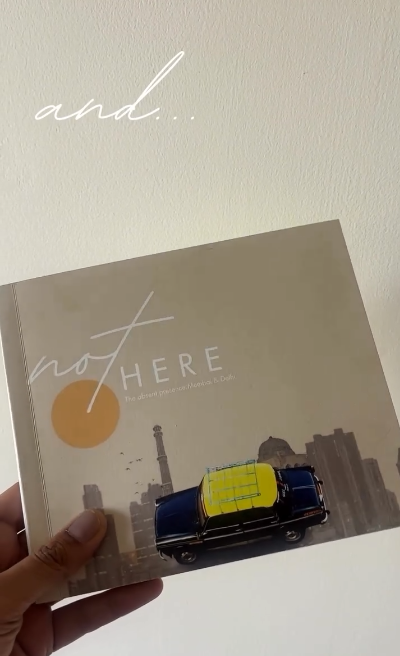
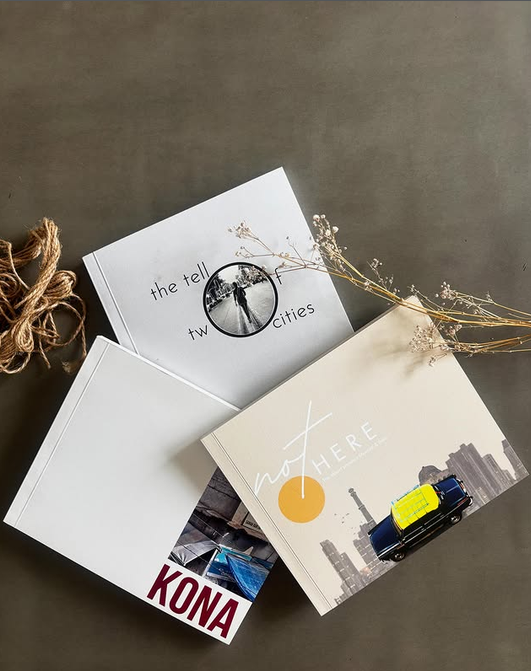
This is her third act in the Mumbai-Delhi series – after The Tell of Two Cities (2023) and KONA, Corners. Connect. (2024) – and, as she puts it herself, the series that ‘began with places’ now ‘ends with the idea of absent-presence,’ shifting the lens from how and where things are, to how they remain.
A room that knew exactly what it was there for, and the venue mattered
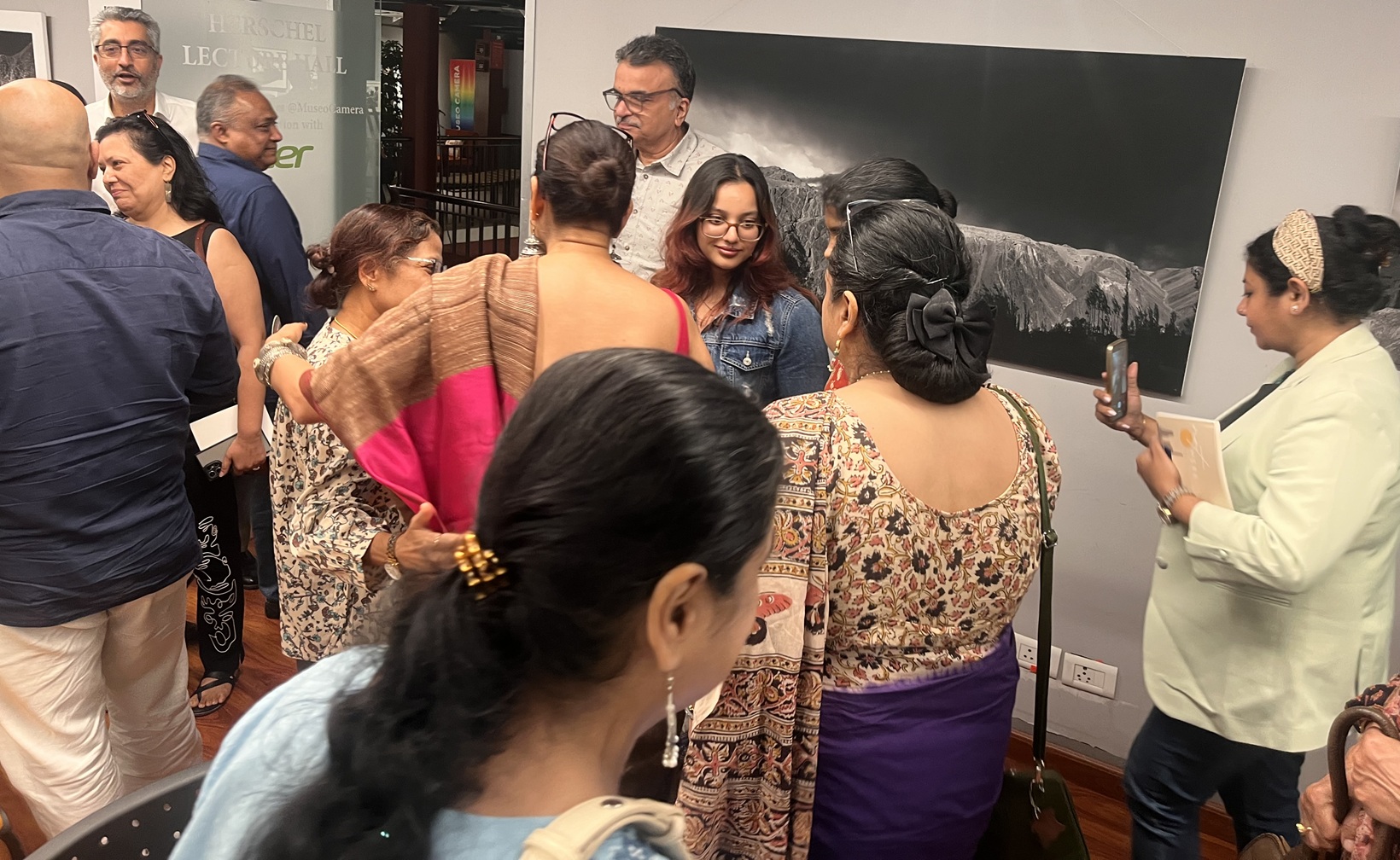
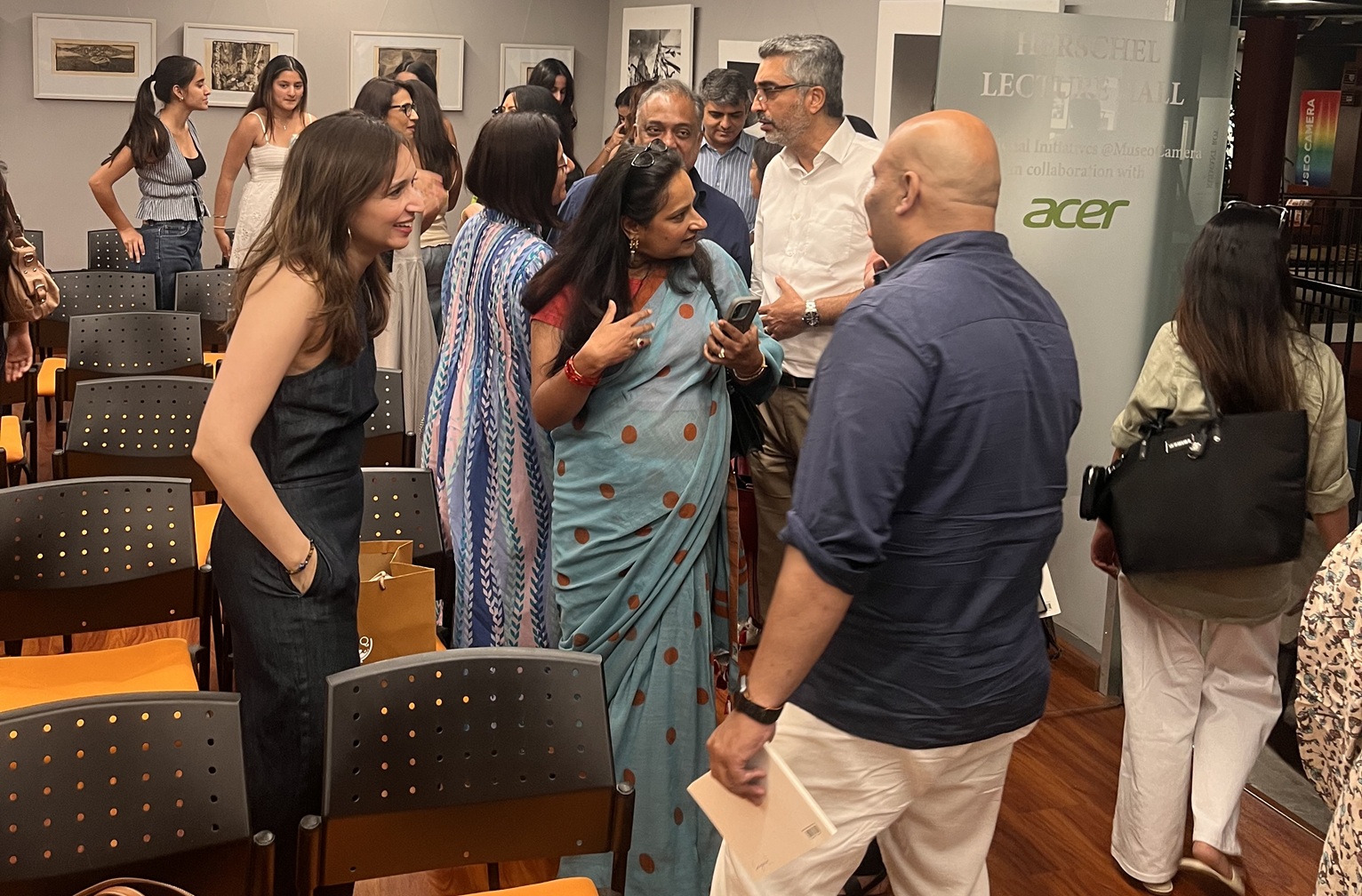
Museo Camera in Gurugram lent the afternoon its hush, its gallery walls doing the quiet work of making people speak a little softer, listen a little harder. Guests walked in past a garden entrance into a space that felt less like a hall and more like a memory itself, tea and cookies doing their gentle work as readers, writers and old friends of the Beyond Bombay community filled the room. But make no mistake – this was Shriti’s evening, and everyone there knew it.
She opened the discussion the way she opens every walk: with an invitation, not a lecture. notHERE, she said, asks readers “to dwell on the traces, residues, remainders – what sociologist Avery Gordon calls ‘ghostly matter’ – that persists in names, memory, growth and spatial echoes.” The book opens with two poems by Kashmiri writer Dr Owais Farooq, who calls Delhi ‘the Phantom City’ – and from that first page, the tone was set: this was never going to be a book about what Mumbai and Delhi are. It was a book about everything they used to be, and quietly still are.
Fourteen voices, one Shriti-shaped thread
Fourteen contributors lent their chapters to notHERE, and at the reading, several of them stepped up to walk the room through their piece. Voice notes from contributors who couldn’t make it in person were played out loud, their words filling the gaps in the room the same way absence fills the pages of the book.
Giraj spoke of a Ghantaghar in Chandni Chowk that no longer stands, and doesn’t even have a ghanta (bell) to its name, and yet lives on as the address everyone in the neighbourhood still gives. Sumedha Chawla told the story of a jhuggi that vanished overnight, and how its absence somehow made the people who once lived there feel more present than ever. Kabir Pandit spoke of Urdu everywhere in daily life, and yet, somehow, nowhere. Kanchan Gandhi took the room through the ache of renamed cities Bombay folding into Mumbai, Madras into Chennai, and the residents of Mani Majra in Chandigarh who fought simply to keep their own name. Shruti Sareen closed the loop with her own vanishing Delhi, college haunts and iconic addresses that now only exist online.
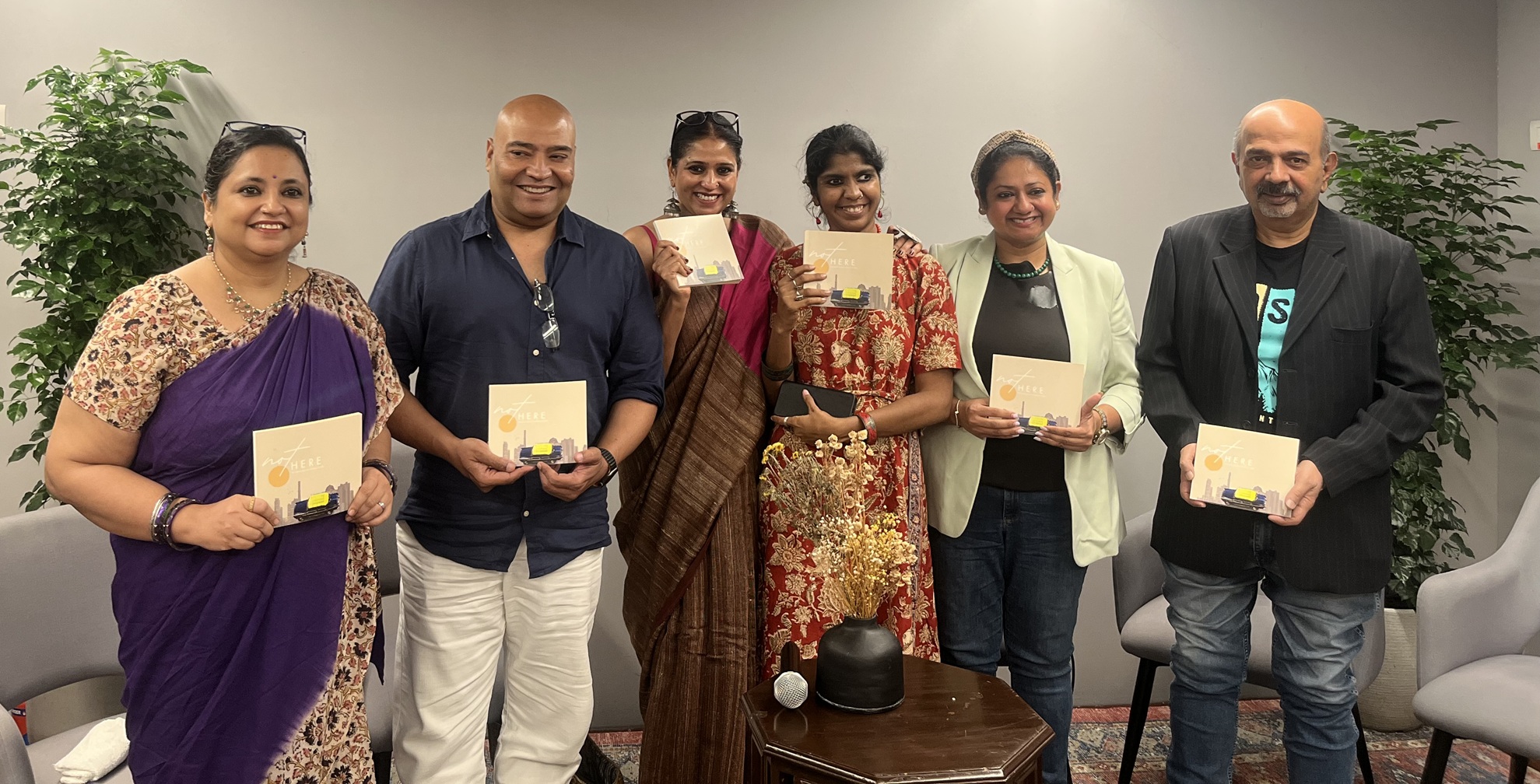
Four photographers lent the book its visual register, turning absence into something you could almost touch.
A book you feel before you finish reading it
The buzz in the room wasn’t only about ideas. It was tactile. Guests kept turning the book over in their hands: the matte weight of the cover, the particular scent that only comes off freshly bound pages, the taxi-and-skyline art that somehow manages to be nostalgic and unfamiliar at once. It is, quite simply, a beautiful object. You can say, the kind of book that makes you want to own it before you’ve read a single essay.
And Shriti’s own words, read aloud that evening, landed exactly the way she intended them to: “There are so many ways to interpret cities, and we are just getting started… much of the city is not here, and yet, in another sense, everywhere.”
Why this matters, and why it’s Shriti’s, through and through
Strip away the poetry, and here’s the plain fact: in eighteen years, one person has built an entire ecosystem. Walks, talks, a TEDx stage, editorial work, three books and counting. Can you imagine the radical idea that cities deserve to be read, not just visited? Beyond Bombay and Beyond Delhi aren’t side projects to Shriti Tyagi’s career. They are her career, and notHERE is its most confident, most literary expression yet.
If you weren’t at Museo Camera that evening, you missed the scent of new pages, the hush before Shriti read her own line back to a full room, and fourteen ways of saying the same thing: nothing is ever really gone from a city. It just moves into memory, into a book, into a voice note played out loud to a room that leaned in to listen.
notHERE: The Absent Presence is available now. Write in at beyondbombay@gmail.com to get your copy, and do find out where Shriti Tyagi and Beyond Bombay are headed next!
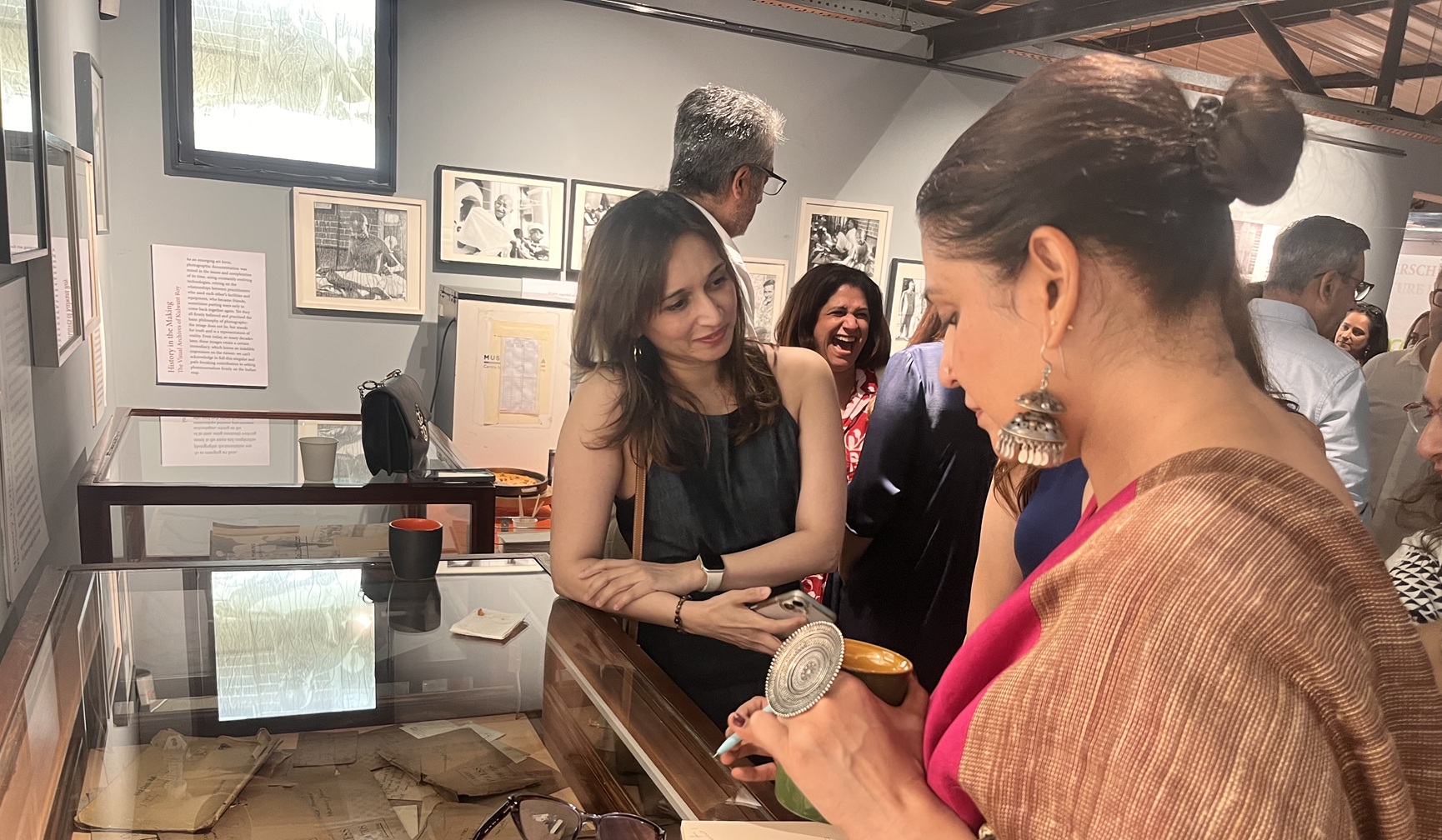
By the end of the evening, the conversation had moved from the discussion chairs to the display cases at the back of the room. G Caffe – Business of Brands could see Shriti Tyagi, with pen in hand, signing copies for the readers who weren’t ready to let the evening end. It’s a small moment, but it says everything about what Beyond Bombay has built over eighteen years: not a brand people follow from a distance, but one they lean in close to, laugh with, and carry home.