













Three new Harvard T.H. Chan School of Public Health studies settle the WHERE’S YOUR PROTEIN debate, and the answer looks a lot more like dal-chawal than a chicken breast.
Ask any Indian vegetarian woman where her protein comes from, and there’s a good chance she’ll hesitate.
Years of gym-culture messaging, protein-powder ads and ‘but where do you get your protein?’ questions from well-meaning relatives have convinced a large part of vegetarian India.
This vegetarian India is a population that is majority female by most survey estimates. For this group, plant-based eating is somehow protein-deficient by default.
Three recent pieces of research out of Harvard’s T.H. Chan School of Public Health say otherwise, and the timing couldn’t be more useful for an Indian audience that eats plant-forward by tradition, not trend.
The finding: more plant protein, less heart disease
A Harvard study published in the American Journal of Clinical Nutrition, using nearly 30 years of data from over 200,000 participants in the Nurses’ Health Studies and the Health Professionals Follow-Up Study, found that a higher ratio of plant protein to animal protein was linked to meaningfully lower cardiovascular risk.
People who got their protein at closer to a 1:2 plant-to-animal ratio, and ideally beyond, saw significantly lower rates of coronary heart disease and stroke than those eating the typical Western pattern of roughly 1:3.
The researchers, led by visiting scientist Andrea Glenn, were careful to note this isn’t just about cutting meat. It’s about what replaces it. The heart-protective effect came specifically from swapping red and processed meat for legumes and nuts, foods naturally rich in fibre, antioxidants, minerals and healthy fats.
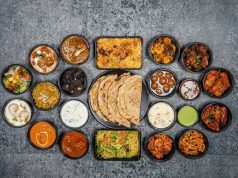
This is, essentially, a fairly precise description of a well-built Indian thali — dal, sabzi, a bowl of curd, a fistful of nuts — versus a diet heavy in processed and red meat. India’s traditional vegetarian pattern was never protein-deficient. It was, if anything, ahead of the curve.
But India also has a real problem — just not the one everyone worries about
A second Harvard piece, drawing on CDC data and expert commentary from Professor Walter Willett, makes a point that lands differently in an Indian context: most people worldwide aren’t under-eating protein.
It says global food companies have simply oversold ‘high-protein’ as a marketing category. The bigger, quieter gap is fibre.
Most adults fall well short of the recommended 25 grams a day for women and 38 grams for men, and low fibre intake is closely tied to poor gut health, higher cardiovascular risk and critically for a large number of Indian women who complain more about irritable bowel syndrome (IBS) and other digestive complaints as well.
This matters enormously for Indian women specifically. IBS in India is under-discussed, often dismissed as gas trouble or acidity, and disproportionately affects women, who are also more likely to have their symptoms minimised by family and even by doctors.
The Harvard research is a useful, evidence-backed reason to stop treating fibre as an afterthought and start treating it as the actual gap in most urban Indian diets. Thanks to increasingly polished, low-fibre convenience food, which are quietly drifting away from the fibre-rich staples our grandmothers ate without thinking twice.
The sweet spot food, and its Indian cousins
The most immediately useful piece of this research package is a third Harvard-linked feature built around a June New York Times article: the idea of a sweet spot food that delivers both protein and fibre together, rather than forcing a choice between the two.
The article’s headline example is soy — specifically tofu, which delivers roughly 22 grams of protein and 3 grams of fibre per half-cup, alongside healthy fats. Willett calls the nutritional profile of soy nearly perfect.
For Indian readers, this is where the research stops being a foreign study and starts being a grocery list:
Soy, closer to home: tofu, soy chunks (nutrela/soya bari), and soy milk are already widely available and inexpensive across urban and semi-urban India — and cook beautifully in very familiar formats: soy keema, soya chunk curry, tofu bhurji in place of paneer bhurji.
Legumes, which India already does better than almost anywhere: rajma, chana, moong, masoor, urad, and lobia are all sweet spot foods in the exact sense Harvard describes as dense in both protein and fibre. A simple bowl of rajma or chana delivers both nutrients the research says most people are missing.
Sprouts: moong and matki sprouts, already a staple of the Indian breakfast table, are a particularly efficient way to get both nutrients in a light, digestible form — genuinely useful for anyone managing IBS, since sprouting also makes legumes easier on digestion.
Millets and whole grains: ragi, bajra, jowar and brown rice bring fibre that polished white rice and refined-flour convenience foods have quietly stripped out of many urban Indian diets.
Curd and fermented foods: while not a Harvard focus in these three pieces, it’s worth noting separately for the gut-health angle that curd, buttermilk (chaas), and fermented batters (idli/dosa) support the gut microbiome in ways that pair naturally with a higher-fibre, plant-forward diet.
What this means, practically, for Indian women
Stop chasing protein in isolation. The Harvard research is consistent: protein eaten with fibre, in the form of legumes, nuts, whole grains and soy, outperforms protein eaten alone. This is exactly how Indian vegetarian food has traditionally been built (dal with rice, chana with roti, sprouts with lemon and onion).
Take fibre and gut health seriously, especially if you have IBS. If digestive discomfort is a regular part of life, the honest starting point isn’t cutting out entire food groups, it’s making sure fibre is actually reaching 25 grams a day through legumes, whole grains, fruit and vegetables, ideally introduced gradually. Anyone with a diagnosed digestive condition should work with a doctor or dietitian on the right approach, since fibre needs and tolerances vary person to person.
Don’t let high-protein marketing set the agenda. Willett’s core point that the high-protein product boom is driven by profit margins, not biology is a useful filter for the wave of protein bars, powders and protein atta now crowding Indian supermarket shelves. A well-built vegetarian thali is already doing the job.
Combine, don’t single out. Classic Indian combinations i.e. dal-chawal, roti-sabzi-dal, chana-chaat aren’t just cultural habits; they’re functionally close to what this research recommends: protein and fibre, plant-forward, eaten together.
The bottom line
For decades, the question asked of Indian vegetarians, especially women, who are so often the last to eat and the first to compromise on their own nutrition, has been: “Where do you get your protein?”
Harvard’s latest research suggests the better question is: are you getting enough fibre alongside it, and the diet best positioned to answer both questions was likely already on your family’s table.