
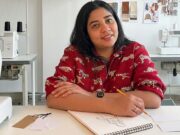


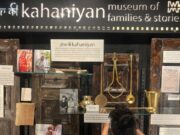


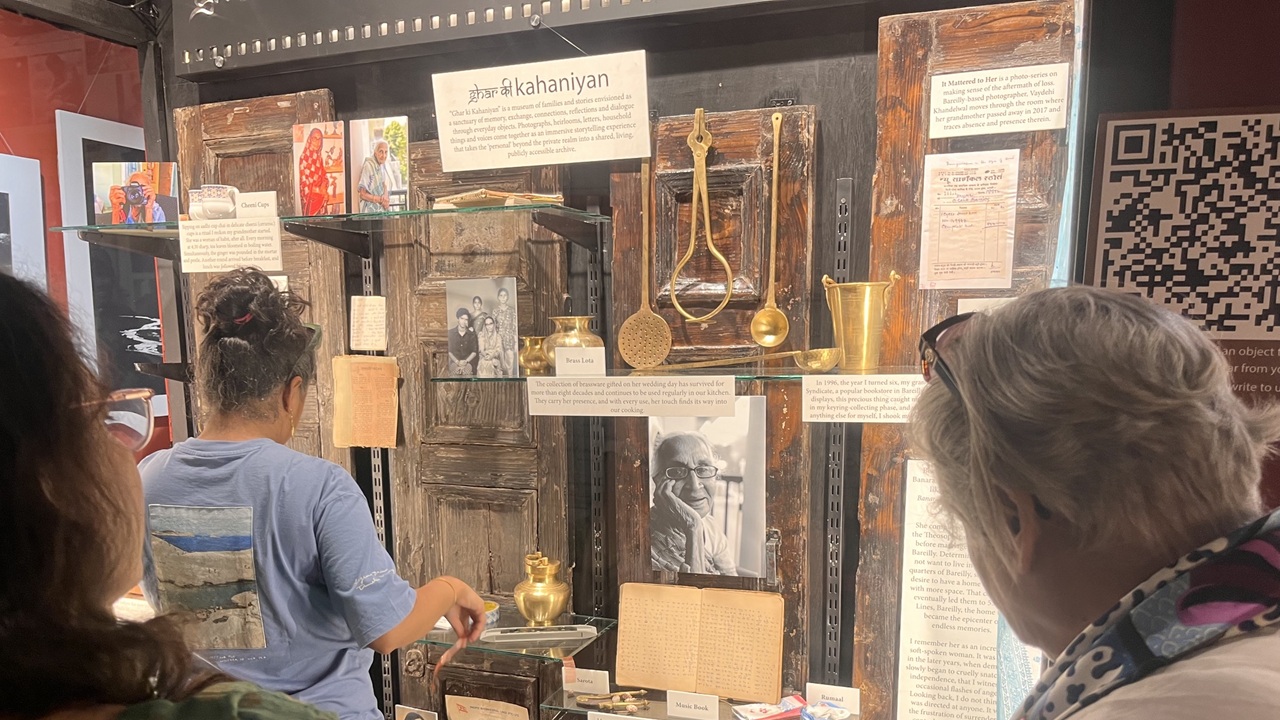
Walk into Museo Camera right now and you won’t find a gallery in the usual sense. You’ll find a glass box holding someone’s grandmother, not literally, but close enough that it stops you mid-step. A collection of dented steel spoons. A cup that once held aadhi cup chai. A music notebook, its pages still carrying ragas someone hummed to herself sixty years ago. And behind every single object in that case, one photographer: Vaydehi Khandelwal, known to her audience as Camerawaali.
This is her story as much as it is her grandmother’s. And it deserves to be told that way.
 A decade in the making, told for the first time
“This has been a deeply personal journey for me as a photographer,” Vaydehi says of the work, and that word, personal, is doing a lot of quiet, heavy lifting. She began photographing her grandmother’s belongings almost ten years ago, long before there was ever a plan to exhibit them. Not for an audience. Not even for her family. Just for herself, a way, as she describes it, of holding on a little longer.
Her Dadi, Parvati Devi Khandelwal, passed away in 2017. For years afterward, the photographs, the diaries, the brassware and handwritten recipes stayed exactly where personal grief usually keeps things: tucked away, private, unseen. It took real courage, Vaydehi admits, to finally bring those fragments of her grandmother’s life out into a public space, and into her very first installation.
Known internationally as Camerawaali, Vaydehi has travelled the world with her lens. She was recently featured in a street photography exhibition in Tokyo. But for this project, her camera didn’t take her anywhere new. It brought her home, to a room in Bareilly her grandmother once filled, and to the quieter, harder work of documentary photography turned inward.
Coming from the small town of Bareilly, Vaydehi says the value of observing closely, and of finding beauty in the seemingly inconsequential, is something she learned rather early. She left home to study documentary photography in Spain, and returned to feed the same curiosity that had pulled her away in the first place. Whether she’s uncovering stories hidden in plain sight, or preserving family recipes through ANUcanCOOK, her ongoing culinary project with her mother, the question she keeps circling back to is a simple one: what do we remember, and why?
What the glass case holds
Everything in ‘It Mattered to Her’ was handpicked and arranged by Vaydehi herself. Every object chosen, every placement considered. This is precisely what makes the space feel less like a curated exhibit and more like a room someone still lives in.
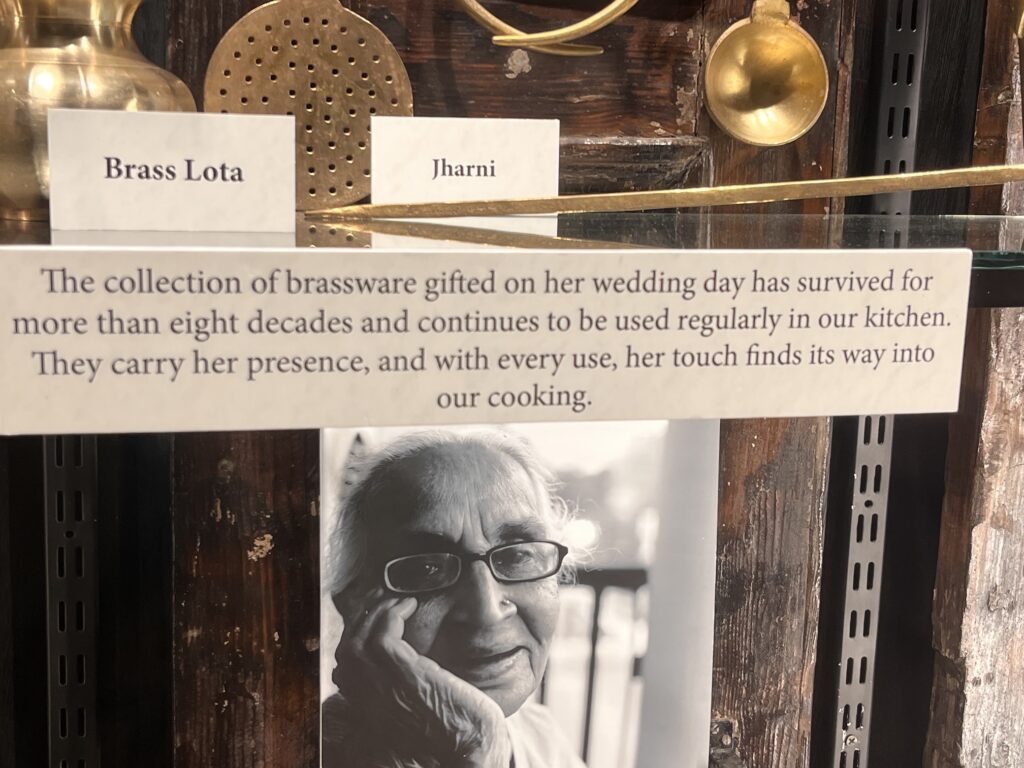
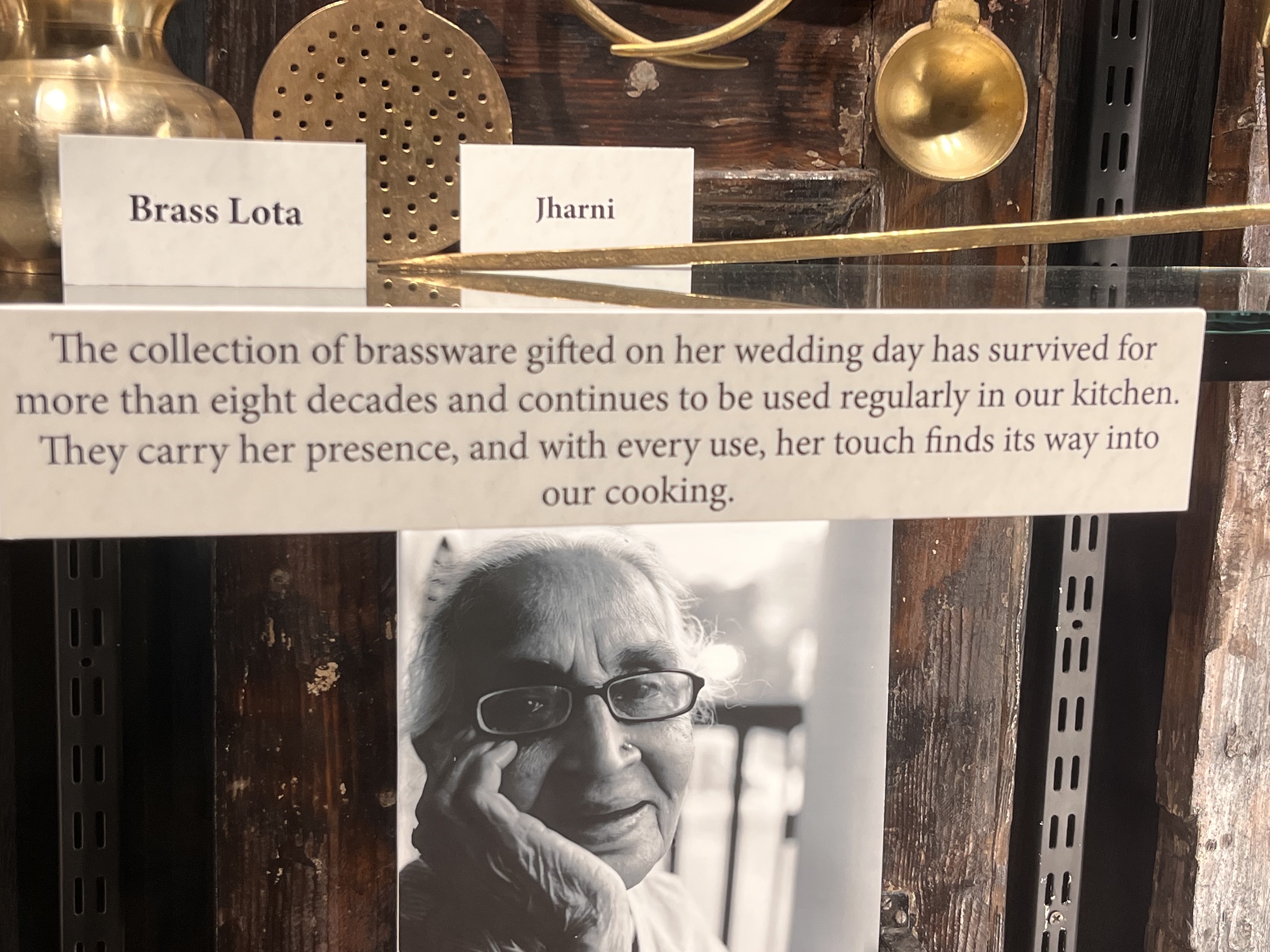
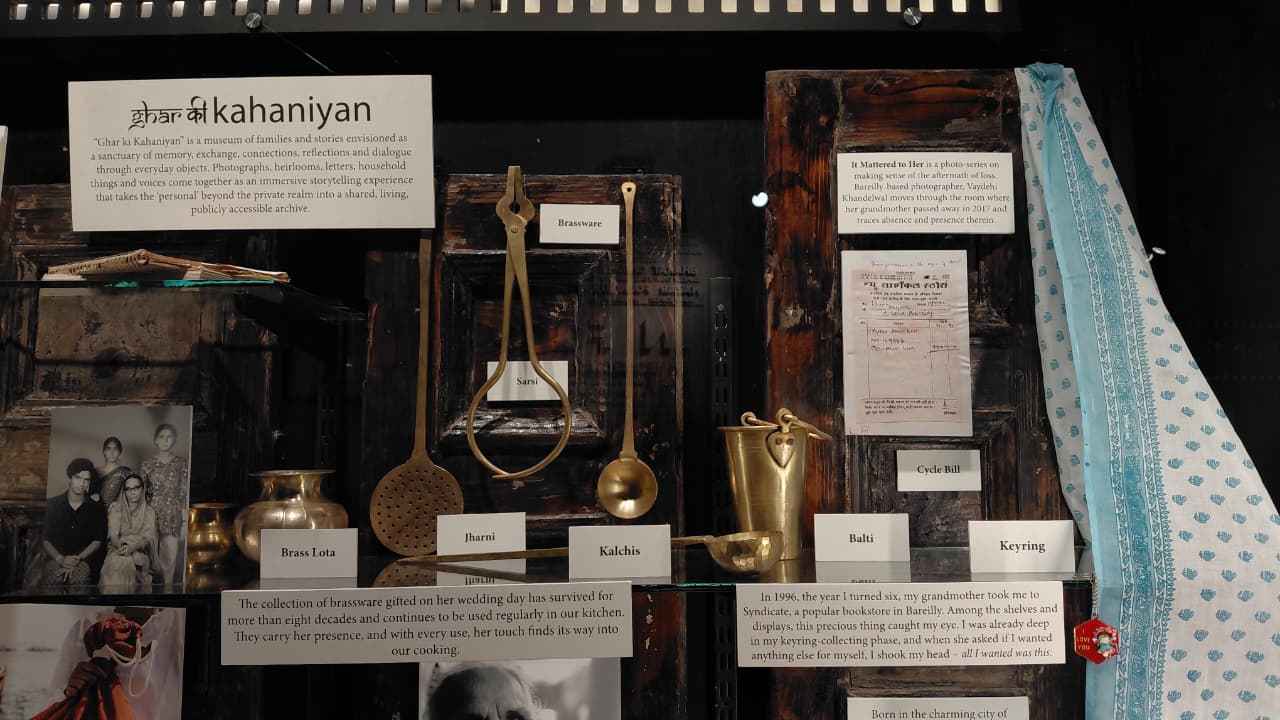
 There’s the brassware gifted to her grandmother on her wedding day, over eight decades old, still used in the family kitchen today – a sarsi, a jharni, a set of kalchis, each carrying, in Vaydehi’s words, a little of her grandmother’s presence into every meal cooked with them. There’s a Gangajali, a handwoven orange cloth bundle photographed at the water’s edge, captioned simply: “Her journey ended here, but everything she was lingers on in memory.” There’s a music book, pages of Hindustani notation her grandmother once used while learning the sitar from a musician in Old Bareilly’s Naya Tola, before family duties pulled her away from formal lessons, leaving only the notations behind to preserve a tune she otherwise kept to herself.
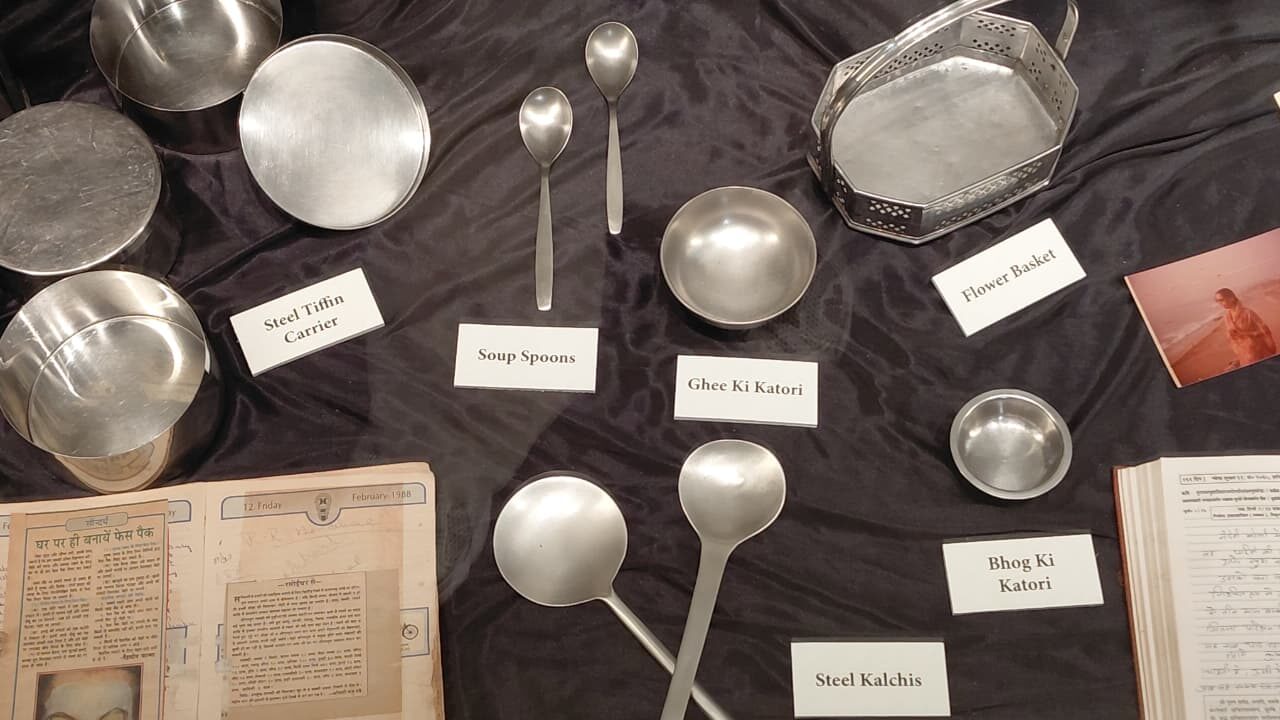
There’s a cycle bill from New Cycles Stores, a key-ring her grandmother bought her when she was six. There’s a Balti, handkerchiefs, steel tiffin carriers, soup spoons, a ‘Bhog ki Katori’ … the kind of objects that mean nothing until you know whose hands held them.
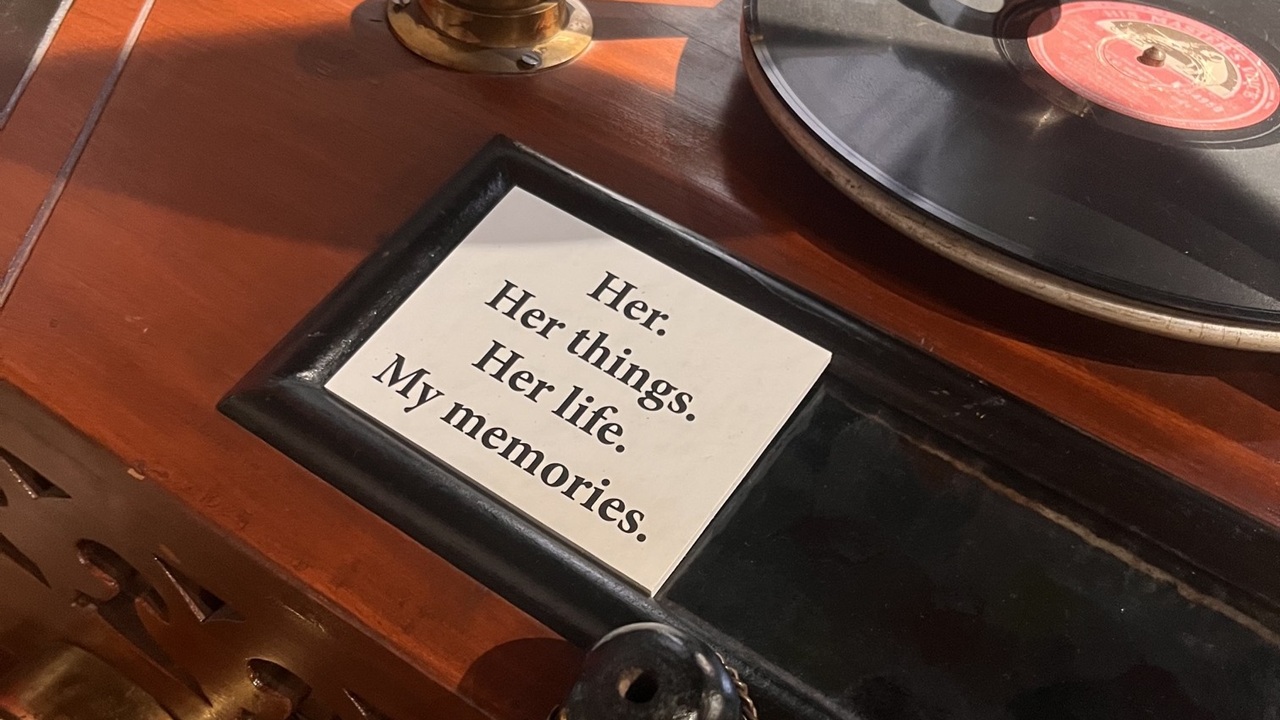 And then there’s the audio. Tucked into the installation is a recording of her grandmother’s own voice, a detail Vaydehi treats almost like a secret, something you find rather than something announced. It is, without question, the most moving element of the entire piece: not a photograph of a voice, but the voice itself.
Who Parvati Devi Khandelwal was
The exhibition doesn’t just document objects. It insists on telling you who their owner was. Born in Banaras, Parvati Devi Khandelwal completed her education at the Theosophical Society of India before marriage brought her to Bareilly. She wanted a home of her own, with more space than the cramped quarters she’d been offered, a conviction that eventually led the family to 53 Civil Lines, Bareilly, the house that would go on to hold, in Vaydehi’s words, ‘endless memories’.
Vaydehi remembers her as an incredibly soft-spoken woman, someone who only showed flashes of anger in her later years, as dementia slowly took away her independence. “Looking back, I do not think it was directed at anyone,” Vaydehi has written. “It was the frustration of surrendering control over her life. Having spent a lifetime caring for others, becoming dependent was perhaps the hardest battle she ever had to face.”
It’s this honesty, refusing to sand down the harder parts of her grandmother’s story, that gives the installation its weight. Vaydehi’s grandmother endearingly called her Chutki, and by Vaydehi’s own account, she knew things were serious only when she heard her actual name, Vaydehi, instead.
Vaydehi’s sister Shriti, in her tribute to this installation, wove her own words on her social media that reads like:
Our grandmother shrinks into a glass box
Inside, with objects and photographs
resting beside one another.
Time-worn diaries
A music book
Recipes, handwritten for her grandkids far away
Nuskhas for ‘good skin’ cut-out from magazines
Brassware that was part of her trousseau
Handkerchiefs, saree,
tiffin box, sarota
and cheeni cups
that held her famous ‘aadhi cup chai….
Her image stands still
Surrounded by things
that remember her better than us.
Perhaps this is how grandmothers remain:
not as photographs alone,
but as objects gathered around them—
quietly holding
everything we once overlooked
until memory
gives it a name….
 The home that made this possible
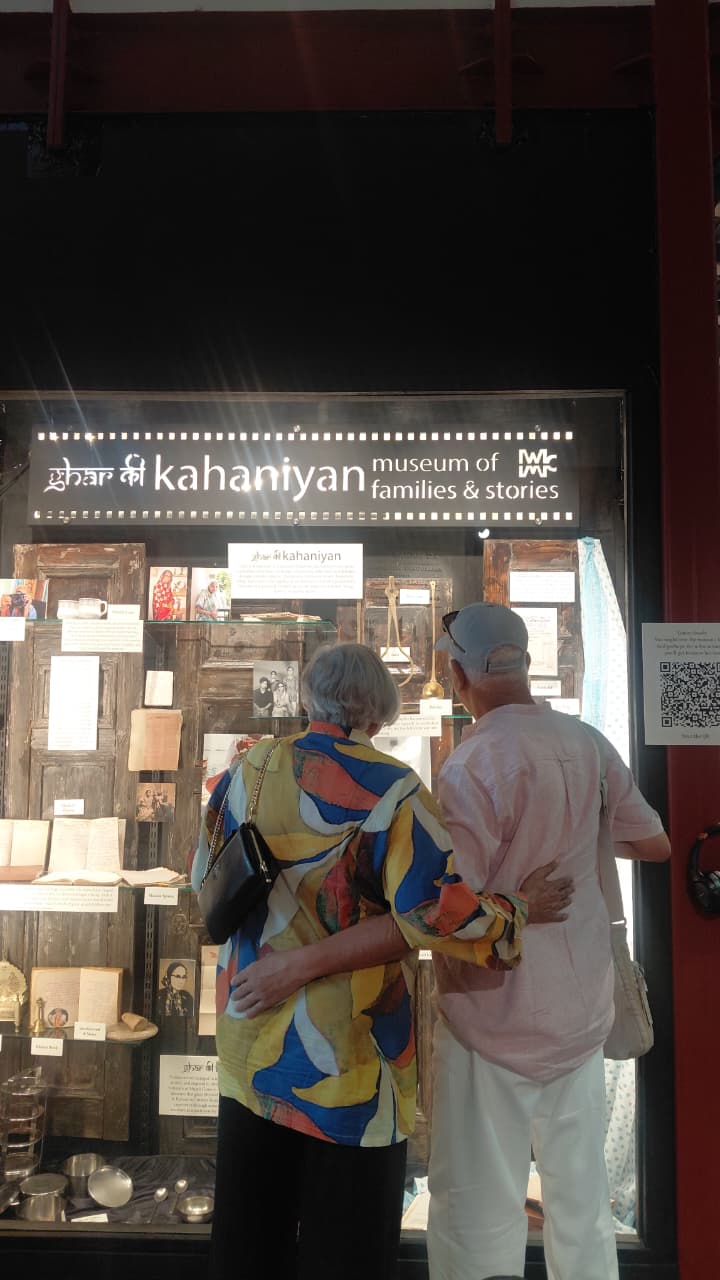
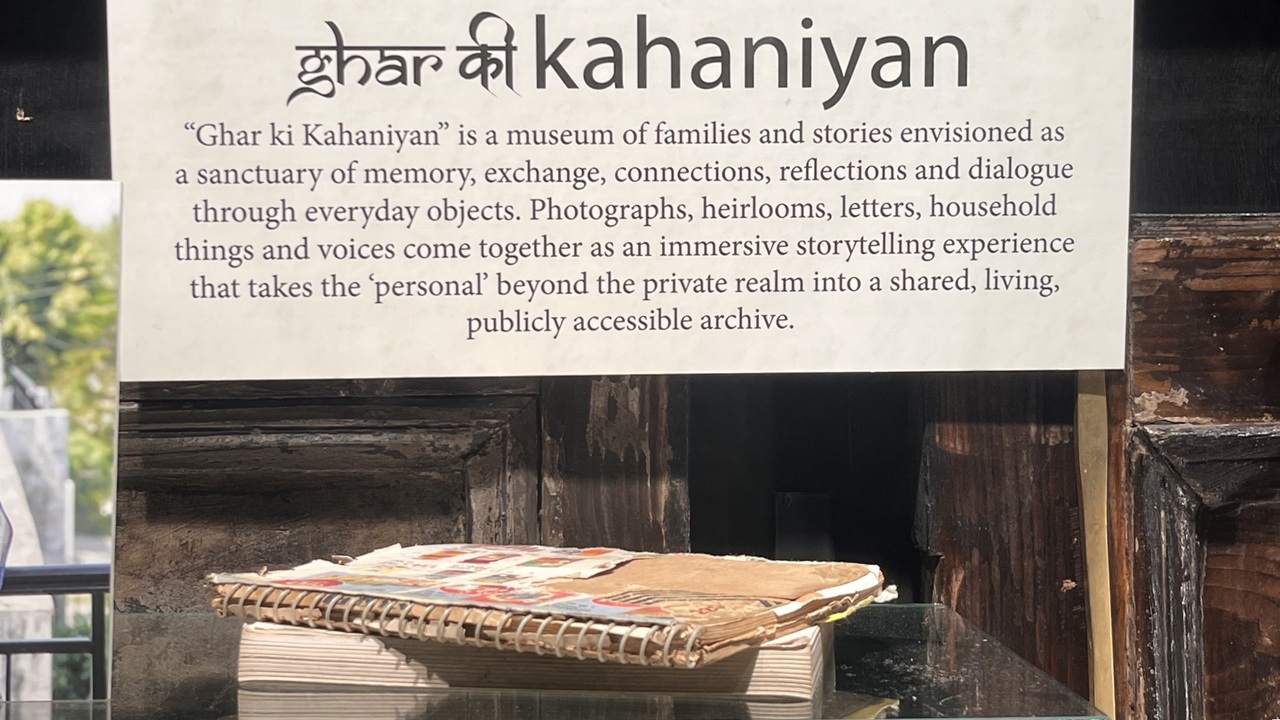
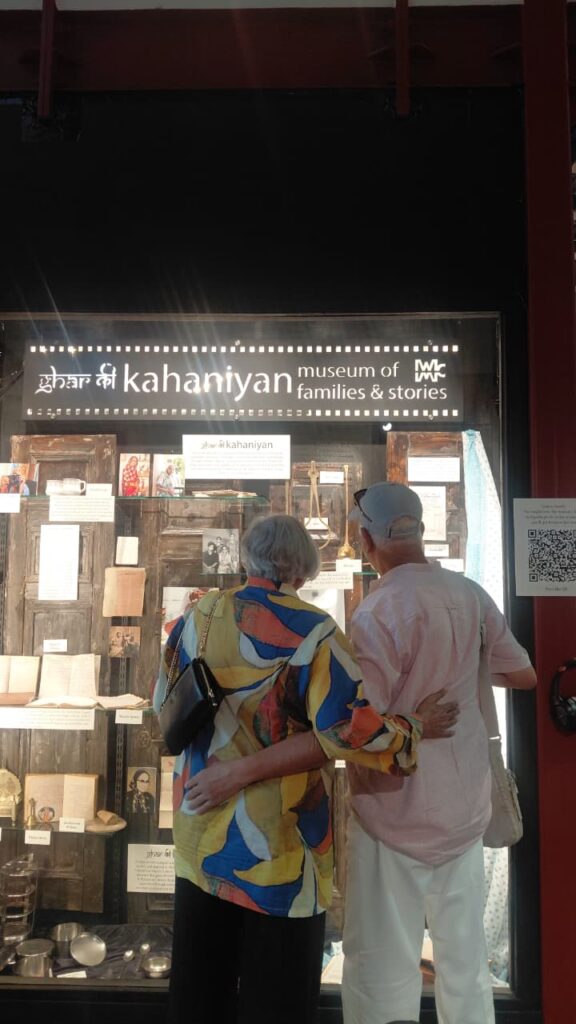
None of this would exist in public view without Museo Camera – Centre for the Photographic Arts, Gurugram, and the platform it offered through Ghar Ki Kahaniyan: Museum of Families and Stories – an ongoing initiative by the India Photo Archive Foundation devoted to preserving exactly this kind of overlooked, deeply personal material. It’s the reason a decade of private photographs found a room, a case, and an audience at all. But the credit for what fills that case, every object, every word, every choice, belongs entirely to Vaydehi Khandelwal.
Why you should still go
In an era of nuclear families, when grandparents so often ask for nothing more than a little extra time, ‘It Mattered to Her’ makes a gentle, insistent case: a family’s real legacy was never in the things themselves. It’s in the stories that get attached to them, and in the granddaughters willing to spend ten quiet years making sure those stories don’t disappear.
 There is no ticket, no entry fee. It only asks for a little of your time.
‘It Mattered to Her’ is on view at Museo Camera, Gurugram, until 26th October, 2026. Free entry.